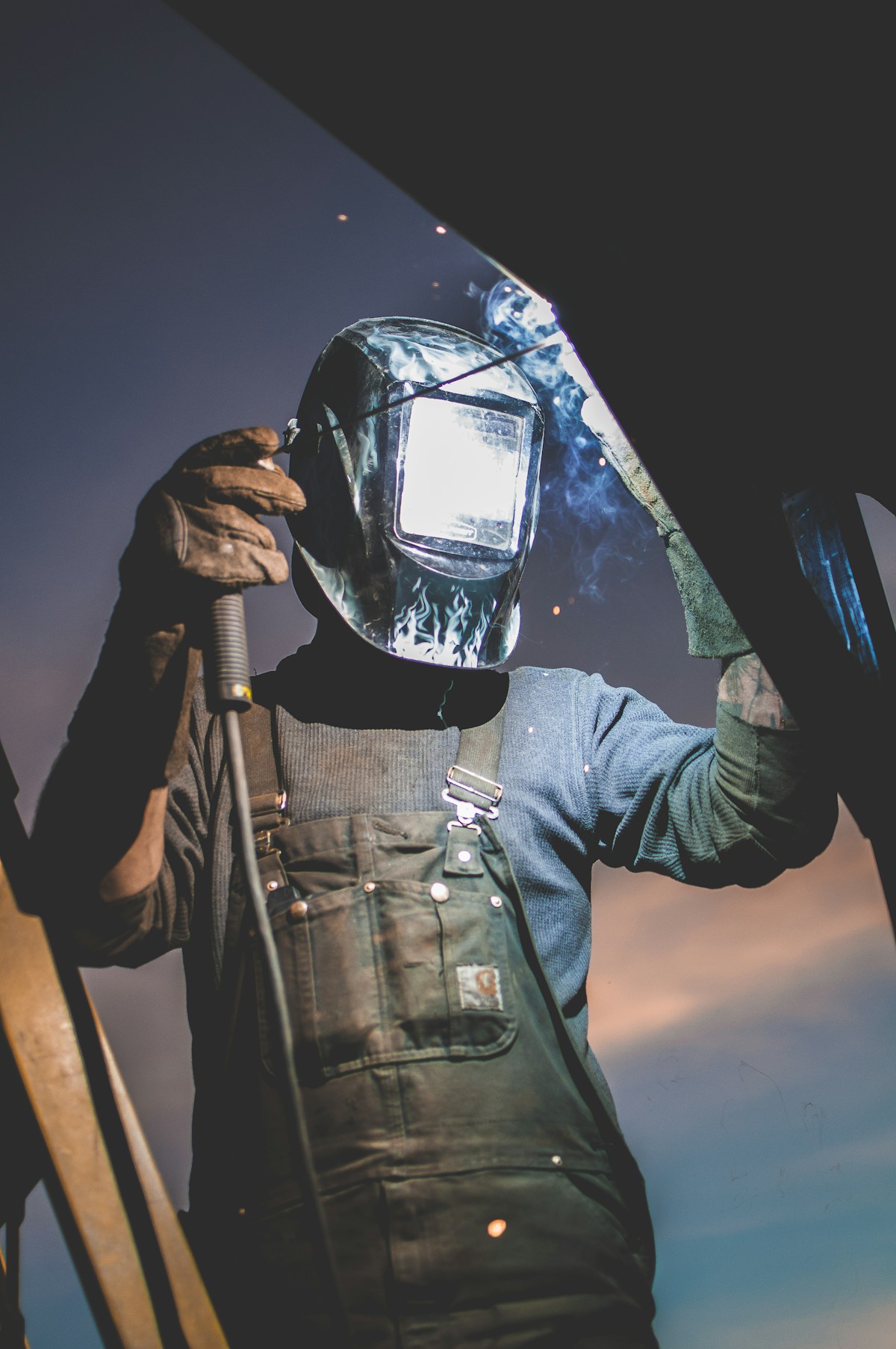
MIG and TIG welding for fabrication and assembly.
Processes
MIG welding suits structural frames, platforms and production steelwork. TIG welding supports stainless appearance joints, thin aluminium and repairs requiring controlled heat input.
Weld procedures follow your specification where provided; otherwise we apply workshop standards appropriate to the material and loading.
Distortion control
Sequencing, tack spacing and intermittent welds manage distortion on long channels and stair strings. Fixtures are used when repeat jobs justify them.
Post-weld straightening is only used when agreed—it is not a substitute for thoughtful sequence.
Consumables and grades
Filler metals match base material. Galvanised repair welding and stainless hygiene work use processes agreed at quote.
Weld length totals on drawings help us plan balanced sequences.
Quality
Visual inspection is standard; further NDT is arranged when you specify and schedule allows.
Weld symbols and consumables
Interpret weld symbols on your drawing as the target unless we notify a constructability issue. Consumables match base metal: ER70S-6 class wire for mild steel, appropriate stainless and aluminium fillers for those alloys.
Galvanised components welded after galvanising need venting and compatible repair processes—state whether work is pre- or post-galvanise.
Repair and modification work
We undertake controlled repair welding on existing structures when scope is defined—cut-out limits, approved WPS if applicable, and coating reinstatement. Undefined ‘fix on site’ scope is quoted after inspection where possible.